7 Steps to Pack Fragile Glassware Without Breakages

Last Updated: 24 November 2026
Quick Summary
You pack fragile glassware without breakages by wrapping every item individually, cushioning the inside and the base, and filling every gap so nothing shifts inside the box. Most breakages come from two glasses touching or from a box packed too loosely, so wrap each glass in packing paper and bubble wrap, stuff cups with crumpled paper, and stand stemware upright, base down.
Wrap each glass in packing paper, adding bubble wrap for heavier tumblers and handled pieces.
Stuff mugs, jugs and bowls with crumpled paper to protect them from the inside.
Collar a wine glass bowl with card about 10 cm wide before wrapping.
Stand stemware upright, base down, as laying it on its side strains the bowl-stem join.
Use double-wall boxes and cushion the bottom with at least five centimetres of crumpled paper.
Dreading packing the good glasses?
We pack and move fragile glassware across the Cotswolds as part of a bespoke removal service.
Table of Contents
How do you pack fragile glassware without breakages?
You pack fragile glassware without breakages by wrapping every item on its own, cushioning the inside and the base, and stopping anything from shifting inside the box. Most breakages come from two glasses touching, or from a box that was packed too loosely. Get those two things right and the rest is straightforward.
This guide sets out a step-by-step method for packing glassware. Below, we show you how to protect stemware, plates and everyday tumblers so they arrive in one piece.
But first, here is what most guides get wrong: they tell you to use lots of paper. Volume is not the same as protection. A glass wrapped loosely in a thick layer of paper still moves, and movement is what cracks it.
The materials you need before you start
Gather everything before you touch a single glass. Stopping halfway to hunt for tape is how items get dropped.
Packing paper or plain newspaper, for wrapping
Bubble wrap, for stems and heavier pieces
Foam sheets, for plates and very delicate rims
Crumpled paper, for filling gaps
Strong packing tape, for sealing boxes
Double-wall boxes, in a few sizes
A marker pen and fragile labels
A clean, clear table to work on
Skip anything greasy or printed with wet ink. Newsprint can transfer onto glass, and ink is hard to remove once it sets.
Step 1: Wrap each glass individually with packing paper and bubble wrap
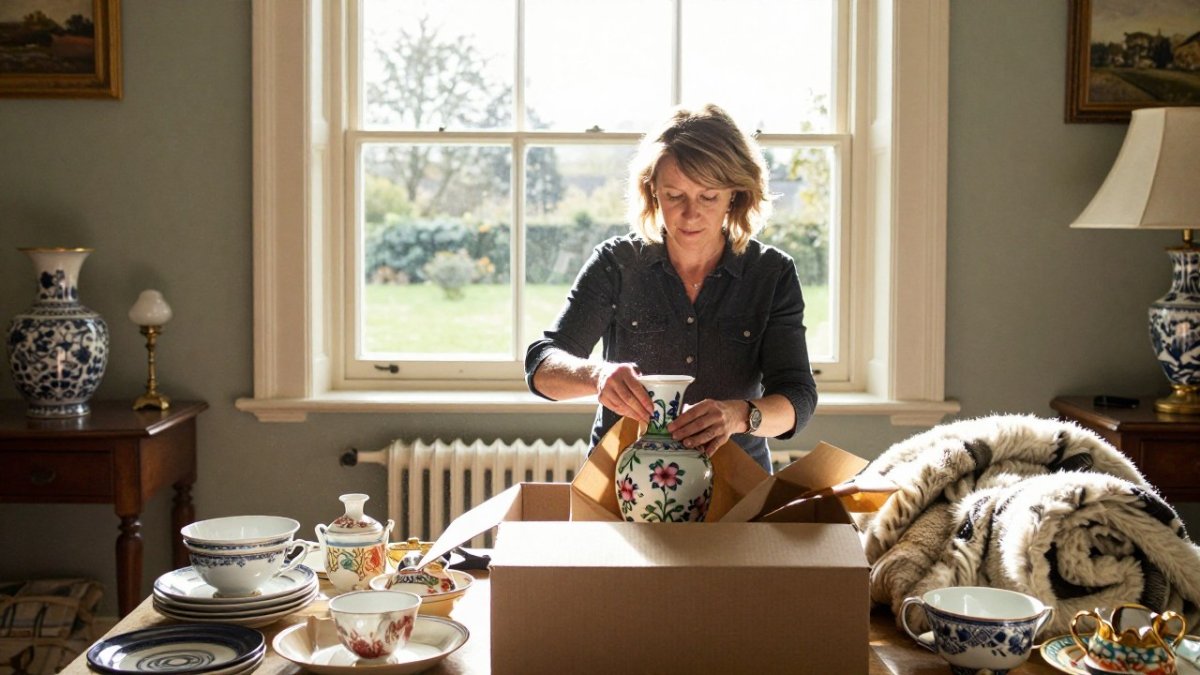
Start with a sheet of packing paper laid flat on your table. Place the glass on its side, roll it once, then tuck the ends in and keep rolling.

For heavier tumblers and anything with a handle, add a layer of bubble wrap over the paper. Tape the wrap to itself, never to the glass.
Then check your work. Give the wrapped glass a gentle shake. If you can feel it move inside its wrapping, add another layer. A common mistake is to wrap a glass once and consider it finished.
Step 2: Cushion the inside of glasses and protect the base
Glasses break from the inside as often as the outside. A mug knocked against its neighbour can crack from within, so stuff the interior with crumpled paper before you wrap.
Mugs and tumblers: a small ball of paper inside the cup
Jugs and vases: paper loosely packed, not rammed tight
Bowls: paper between stacked bowls, never bare rim on bare rim
Bases need attention too. Stand each wrapped glass on a scrap of foam or folded paper before it goes in the box. The base takes the whole weight of everything above it.
Watch out: never stack unwrapped glasses inside one another. They wedge together and one will chip when you pull them apart.
How to wrap wine glasses for moving without snapping the stems
Wine glasses need a different approach, because the stem is the weak point and the bowl is thin. The method below suits stemware, including champagne flutes, coupes and balloon glasses as well as standard wine glasses.
Step 1, collar the bowl. Cut a strip of card about 10 cm wide and long enough to wrap around the bowl. Roll it into a tube, slide it over the bowl and tape the card to itself. This spreads any knock across the whole bowl rather than one point.
Step 2, wrap the bowl first. Lay the glass on its side on a sheet of bubble wrap, with the bowl at one end. Roll the bowl two full turns, then continue rolling down the stem and over the base. The stem is never asked to carry weight because the bowl is already cushioned.
Step 3, add a paper layer. Wrap the whole bundle in packing paper, tucking the ends in as you go. Tape the paper to itself, never to the glass.
Step 4, pack upright, base down. Stand each wrapped glass in the box with the base on the bottom. Laying stemware on its side in the box puts sideways strain on the join between bowl and stem, which is where most snap.
For flutes, add a second card collar around the bowl and pack them in a single row, not stacked. For coupes, the wide bowl needs a foam sheet between each glass. For unusually shaped pieces, decanters, tinted glass, hand-blown goblets, wrap the bowl in foam first, then bubble wrap, then paper, and pack them in their own small box rather than with tumblers. For awkward, fragile items that have to pass through tight spaces, our guide to moving a piano through narrow doorways goes deeper.
Watch out: never pack stemware with the bowl resting on the base of another glass. The rim of the lower bowl will chip the upper bowl, and the chip is usually invisible until the glass is filled with hot liquid.
Here is the stemware method at a glance, from collaring the bowl to standing each glass base down in the box.
Step | What to do | Key detail |
1 | Collar the bowl | Card strip about 10 cm wide, taped to itself |
2 | Wrap the bowl first | Roll bowl two full turns, then down stem and base |
3 | Add a paper layer | Tape paper to itself, never to the glass |
4 | Pack upright, base down | Laying stemware on its side strains the bowl-stem join |
Flutes | Add a second card collar | Pack in a single row, not stacked |
Coupes | Foam sheet between each glass | Wide bowl needs extra protection |
Unusually shaped pieces | Foam, then bubble wrap, then paper | Pack in their own small box |
How to pack plates and glasses in the same box safely
Pack plates and glasses together only when you build the box in layers, with the heaviest items at the bottom. Plates go first, standing on edge, never lying flat. A stack of flat plates cracks under its own weight.
Line the box base with crumpled paper
Stand plates on edge, separated by foam or paper
Add a full layer of crumpled paper over the plates
Place wrapped glasses upright on top, base down
Fill every gap so nothing moves
Seal the box and label it fragile
Keep the finished box to a weight you can lift comfortably on your own. A box you cannot carry safely is a box that gets dropped.
Choosing the best boxes for packing glassware
The best boxes for packing glassware are double-wall cardboard, small enough that you can carry them, and filled to the top. A half-empty box collapses inward when stacked, and that is when glass breaks.
Match box size to contents. Small boxes for glasses, medium for plates and bowls, and nothing oversized. A large box filled with glassware will be too heavy to lift safely.
Cushion the bottom with at least five centimetres of crumpled paper before anything goes in. If you are packing delicate items in an older home, our guide to moving a period property without damage covers the extra care those buildings need.
How to label fragile moving boxes so nothing gets stacked on top
Label every box on the top and on at least two sides, so the warning is visible from any angle. Write "FRAGILE" in large letters, add the room it belongs to, and list what is inside.
Add arrows pointing up. A box marked "this way up" tells a loader more than the word fragile on its own. Then keep fragile boxes separate on the van and in the new home, away from heavy furniture.
It helps to tell your removal team which boxes are fragile, even if they are already labelled.
Book a professional packing service for your glassware
Some collections are too valuable to risk, and may warrant professional packing support.
Our removal and packing services can help with glassware, and our bespoke removals service can be arranged around pieces you cannot replace. If you are still planning the wider move, our step-by-step house move preparation guide will help you fit packing into the bigger picture.
Packing glass yourself works well for everyday cups and plates. It gets harder when a cabinet holds pieces that cannot be replaced, or when the move is already taking up every spare hour you have. Premier Cotswolds Movers & Clearers offers packing assistance, a bespoke removals service and an expert team who handle fragile items as part of the job. Get a quote and let us take the packing off your hands.
Frequently Asked Questions
Should you wrap glasses individually when moving?
Yes. Wrapping each glass on its own stops pieces knocking against each other, which is the most common cause of breakage in transit. Use two or three sheets of packing paper, then a layer of bubble wrap for stemware. Crumple paper into the bottom of the box, stand the wrapped glasses upright, and fill every gap with more crumpled paper so nothing shifts when the box is lifted.
What is the best way to pack fragile glassware for moving?
The reliable method is: wrap each item individually, cushion the inside of cups and glasses with crumpled paper, line the box base with 5-8 cm of padding, stand glasses upright rather than on their sides, fill all gaps, and seal the box with a fragile label on every side. Keep boxes to a manageable weight so they can be lifted safely, and pack glassware last so it travels on top of heavier items.
Can you pack glasses in a cardboard box?
Yes, a double-walled cardboard box is fine as long as the glasses are wrapped and the box is properly cushioned. Use a box sized so the wrapped items fit snugly without forcing, line the bottom with crumpled paper or foam, and fill any remaining space so the contents cannot move. Avoid overfilling, as a bulging box will not stack or seal properly.
Is it better to pack glassware upright or on its side?
Upright is safer for glasses and stemware. Standing them base down spreads the load through the strongest part of the glass and keeps pressure off the rim and stem. Plates are the exception: pack them on their edge, never flat, so the weight of the stack does not crack the lower plates. In both cases, fill gaps with crumpled paper to prevent movement.
Comments