How to Plan Your House Move: How Long It Really Takes

Last Updated: October 30, 2026
Quick Summary
Most people moving house in the UK should plan for roughly three to six months from start to finish, though the figure varies widely. A 2026 guide reports an average of 12 to 24 weeks for the full house move, and legal completion alone usually takes 12 to 16 weeks.
Conveyancing typically takes 12 to 16 weeks, depending mostly on how quickly third-party searches come back.
Local authority searches are usually the bottleneck, commonly taking two to six weeks depending on the council.
A chain-free purchase can finish in around 8 to 10 weeks, though it still needs the same legal steps.
The physical move itself usually takes a single day, with smaller properties taking a few hours door to door.
Ask your conveyancer early which searches they expect to order, so you can chase the bottleneck.
Table of Contents
How Long a House Move Takes in the UK on Average
Most people moving house in the UK should plan for roughly three to six months from start to finish, though the figure varies widely. A 2026 guide reports an average timeline of 12 to 24 weeks for the full house move, and notes that current market conditions affect how long each stage takes (How Long Does It Take to Move House? The 2026 UK guide).
The honest answer is that no single average fits every move. Published estimates differ because they measure different things. Some describe the legal transaction, others the whole process from finding a home to unpacking.
A study from Matterport found that home buyers take just over half a year on average to move into a new home, and broke the duration down step by step (Matterport study on each step of the home-buying process). That figure includes the time spent house-hunting, which many people underestimate.
A clear picture of the stages below will help you plan the physical side of a move realistically.
Timeline From Offer Accepted to Completion
Once your offer is accepted, the legal transaction usually takes between 12 and 16 weeks to complete, though a straightforward chain-free purchase can finish in around 8 to 10 weeks and a long chain can stretch past 20. Most of that time goes on legal checks, searches and paperwork rather than on the move itself.
A typical sequence, with the ranges most conveyancers work to, looks like this:
Weeks 1-2, Instruction and mortgage: You instruct a solicitor and formally apply for (or confirm) your mortgage. A lender's formal mortgage offer commonly arrives within two to four weeks of a full application, but it can be quicker if your paperwork is complete.
Weeks 2-6, Searches, survey and enquiries: Your conveyancer orders local authority, drainage, environmental and (where relevant) coal-mining or chancel-repair searches. Local authority searches are the usual bottleneck and commonly take two to six weeks depending on the council. Your survey is booked in parallel, and the report usually lands within a week of inspection. Your conveyancer then raises enquiries with the seller's solicitor, which can take one to three weeks of back-and-forth.
Weeks 6-10, Review, report and exchange: Your solicitor reports to you on the title, searches and mortgage conditions. Once you are satisfied and your deposit is in place, contracts are exchanged and a completion date is fixed. Exchange is the point of no return for both sides.
Weeks 10-16, Completion: Final checks, funds transfer and key release happen on completion day. The gap between exchange and completion is usually one to four weeks, set by agreement and often driven by mortgage or chain timing.
What runs in parallel and what does not. Searches, the survey and the mortgage application can all progress at the same time, which is why a well-organised purchase does not simply add these durations together. What cannot be rushed is the dependency chain: your conveyancer cannot report to you until searches and enquiries are back, and you cannot exchange until your mortgage offer is formal and your deposit is ready. A single slow search or a missing mortgage condition therefore holds up everything downstream.
Watch out: Delays often start with the chain. If one sale stalls, every purchase linked to it can stall too. A common pattern is for a buyer near the top of a long chain to be ready to exchange while a sale three links below is still waiting on a search result.
Pro Tip Ask your conveyancer at instruction which searches they expect to order and roughly how long their local authority is currently taking. Knowing the bottleneck early lets you chase it rather than discover it at week eight.
For a fuller walk-through of the legal side, see our guide to conveyancing.
The legal side of a purchase follows a fairly predictable sequence, with each stage taking a set range of weeks.
Stage | Typical timing | Key point |
Instruction and mortgage | Weeks 1-2 | Formal mortgage offer within two to four weeks |
Searches, survey and enquiries | Weeks 2-6 | Local authority searches are usually the bottleneck |
Review, report and exchange | Weeks 6-10 | Exchange is the point of no return |
Completion | Weeks 10-16 | Gap after exchange is usually one to four weeks |
Chain-free purchase | About 8-10 weeks | Faster, though still needs the same legal steps |
How Long Does Conveyancing Take?
Conveyancing typically takes 12 to 16 weeks, according to a 2026 guide on the subject (How Long Does Conveyancing Take? The 2026 Timeline). The length depends mostly on how quickly information arrives from third parties.
Slow replies to searches are the usual culprit. A conveyancer cannot move forward until local authority searches and other enquiries come back. Ask your conveyancer early which searches they expect to order, so you can help chase the results.
How Long Does It Take to Move House With No Chain?
A chain-free purchase usually moves faster, because there is no series of linked sales waiting on each other. You still need the same legal steps, so the transaction itself rarely shrinks below about 12 weeks.
The real saving comes from avoiding the risk of a collapsed chain. When a buyer has no onward sale to wait for, the completion date is easier to hold.
How Long Does Moving Day Take?
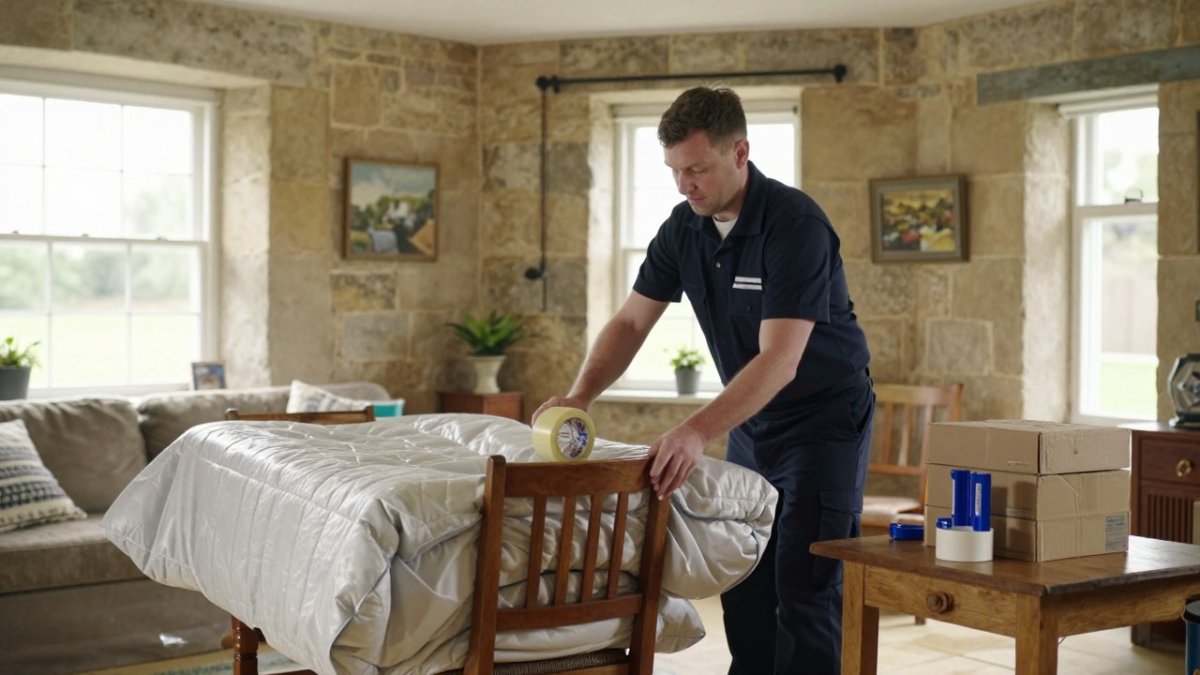
Moving day is much shorter than the overall process, and it is worth separating the two clearly: the legal transaction takes weeks or months, while the physical move itself usually takes a single day. Find a local removals company near you that can handle the job in your area. Most local removals are completed within a working day, and the hours on the day depend mainly on property size, volume of belongings, access at both ends and travelling distance.

As a rough guide for a local move, durations commonly vary with property size:
Smaller properties usually take a few hours door to door.
Larger properties often take a full working day, and sometimes longer when the volume is large or access is difficult.
Those figures cover loading, travel and unloading together. Loading usually takes the longest share, because carrying items out and securing them in the van is slower than unloading into an empty property. Travel is simply the drive between addresses. Unloading is often quicker, but it can be slowed by stairs, narrow doorways, parking restrictions or a long carry from the van to the front door.
A realistic completion-day schedule. Completion day is where the legal and physical sides meet, and timing matters because you cannot move in until the purchase completes and keys are released.
Morning: Your solicitor confirms completion and funds are transferred; keys are released once the seller's solicitor confirms receipt. This can happen any time from late morning onwards, and occasionally slips into the afternoon.
Removals arrival: The crew typically arrives at the loading address in the morning, but if you are buying and selling on the same day, the crew may need to wait for key release before unloading at the new property.
Meter readings and handover: Take gas, electricity and water readings at both properties on the day, and keep keys, paperwork and an essentials box with you rather than in the van.
Late completion risk: If completion slips to late afternoon, unloading can run into the evening. Build a buffer into the day and confirm with your removals firm how they handle a delayed key release.
Watch Out If you are in a chain, do not book removals for the earliest possible slot without agreeing a contingency with the firm. A completion that slips by a few hours can turn a one-day move into an evening unload.
A removals firm can quote for a local move so you know the likely day length in advance. Our practical guide explains how to choose a removals company before you book one.
How Long Does It Take to Pack a House?
Packing usually takes longer than most people expect. A realistic approach is to give yourself several weeks, starting with the rooms you use least.
Work through the house in this order:
Loft, garage and spare rooms first
Seasonal clothes and books next
Kitchen and bathroom items in the final week
Professional packing support can shorten this stage, particularly for larger homes. Read how professional packing and moving services reduce the stress of relocation.
Planning Your Own Move Day by Day
A simple plan keeps the moving process on track. Start about eight weeks before completion and work backwards from the key dates.
Eight weeks out: Book your removals company and check their quote covers everything you need
Four weeks out: Begin packing non-essential items and notify utilities
One week out: Confirm access times with the sellers and the removals team
Moving day: Take meter readings and keep your keys and paperwork together
Watch the budget as you plan, and ask any removals firm to explain which extras are included in its quote. Our guide to avoiding hidden costs during removals shows which charges to budget for.
Planning ahead makes the whole process calmer. Professional removals support can take the physical moving work off your hands, so you can focus on the legal steps.
Frequently Asked Questions
What is the average time it takes to move house?
In the UK, a full house move typically takes around 12 to 24 weeks from the start of the search to collecting the keys, according to a 2026 UK moving guide. The figure varies with the size of the chain, whether you are buying with a mortgage, and how quickly your solicitor receives searches and certificates. Cash buyers and chain-free sales often complete much sooner. Your own timeline will depend on those factors, so ask your solicitor or conveyancer for a realistic estimate early on.
How long does conveyancing take?
Conveyancing typically takes 12 to 16 weeks, according to a 2026 guide to UK conveyancing timelines. The period covers the legal searches, the exchange of contracts and completion. Delays usually come from slow responses to enquiries, problems with searches or the other party's chain. Keeping documents ready and responding quickly to your conveyancer can help keep the process on track.
How long does it take to move house with no chain?
A chain-free purchase or sale generally moves faster because fewer parties need to complete at the same time. Published UK timelines show that the transaction itself can still take several weeks, since searches, mortgage approval and contract exchange still have to happen. The total time depends on your solicitor's workload and how quickly the mortgage lender completes its checks.
How long does moving day usually take?
Moving day itself is separate from the legal process. A 2026 UK moving guide reports that local moves commonly take 2 to 8 hours on the day, while the full process from planning to unpacking can take 6 to 10 weeks. The length of the physical move depends on the size of the property, the volume of belongings and how easily the removal team can access the property.


Comments