How to Value House Contents for Probate

Last Updated: 8 November 2026
Quick Summary
A probate contents valuation puts a defensible open-market value on the household goods and personal belongings inside a property as at the date of death. It covers furniture, white goods, jewellery, art and specialist chattels, and the figures are reported to HMRC where Inheritance Tax is due.
Value contents at open-market value as at the date of death, not replacement or insurance cost.
Photograph each room from the doorway before anything is moved to protect the record.
Group low-value items by room rather than itemising every teaspoon.
Record the valuation method used for each category, such as auction comparable or dealer quote.
Bring in a professional valuer for jewellery, art or collections you cannot confidently price.
Not sure what the contents are worth?
We inventory, value and clear probate properties with a clear paper trail for executors.
Table of Contents
What a Probate Contents Valuation Covers
A probate contents valuation is the process of putting a defensible open-market value on the household goods and personal belongings inside a property as at the date of death.
It covers furniture, white goods, garden equipment, clothing, books, kitchenware, tools and general bric-a-brac. HMRC's own guidance on valuing an estate for Inheritance Tax treats household and personal goods as part of the estate, so they need a figure whether or not anyone wants to buy them.
Household goods versus valuables and specialist items
The split that matters is between ordinary household goods and specialist chattels. Ordinary goods can be valued in bulk or by room. Specialist items often need an expert eye, and a single piece of jewellery can outweigh an entire houseful of furniture.
Ordinary goods: sofas, beds, wardrobes, appliances, crockery, garden tools
Valuables: jewellery, watches, silver, gold, quality ceramics
Specialist chattels: art, antiques, clocks, instruments, collections, militaria
How to Value a House and Its Contents for Probate
Value a house and its contents for probate by recording every room, describing each item, and applying an open-market value as at the date of death.

A room-by-room inventory workflow
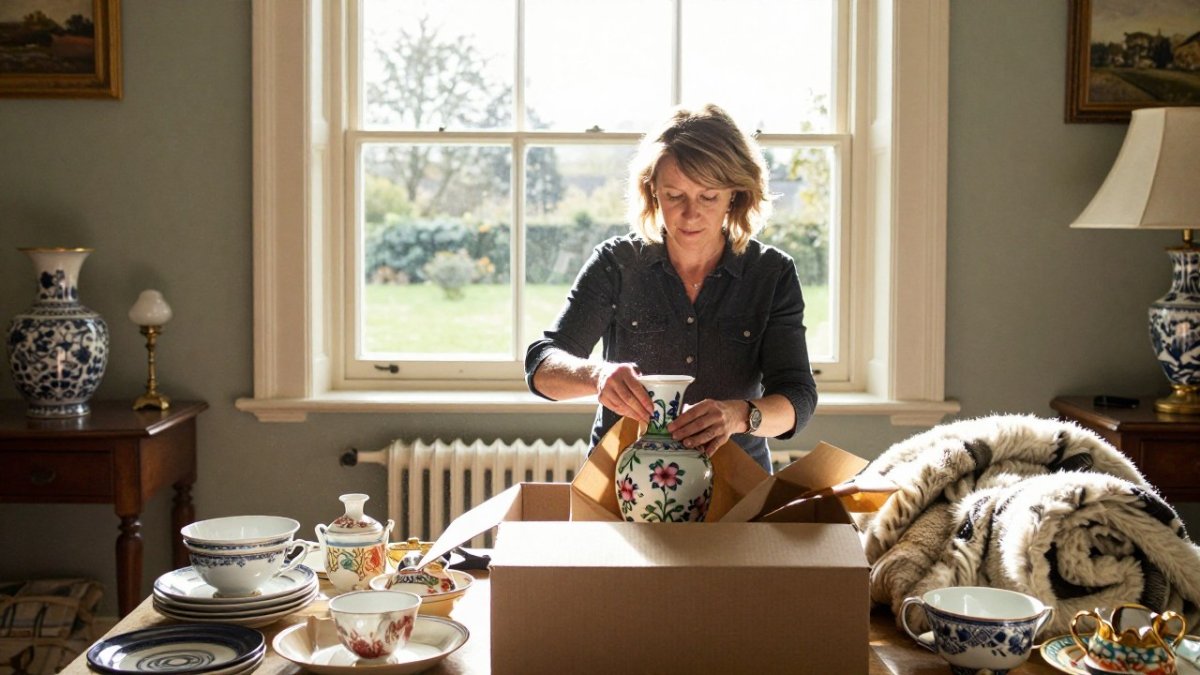
Work through the property methodically and photograph as you go. This is the part most guides skip, and it is where valuations go wrong. The aim is a record that a stranger could pick up six months later and understand without asking you a question.
Set up a register before you start. Use a spreadsheet with one row per item and columns for room, description, quantity, condition, marks or signatures, photograph reference and estimated value. Number rooms on a floor plan so the register and the photographs line up.
Photograph the whole room first. Take a wide shot from each doorway before anything is moved. This proves what was in the property on the day you attended and protects you if an item is later disputed or goes missing.
Work clockwise and list as you go. Describe each item in a few words, "oak drop-leaf table, 19th-century style, scratches to top", rather than "table". Quantity matters: "six dining chairs" is one line, not six.
Grade condition honestly. Use a simple scale such as good, fair, poor or unsaleable. Condition drives open-market value far more than age, and a candid grade is easier to defend than an optimistic one.
Triage as you record. Mark anything that looks valuable, signed, hallmarked, old, mechanical or part of a set. This is the point at which you decide whether an item goes to a general valuer or a specialist.
Capture the evidence close up. Photograph maker's marks, signatures, hallmarks, serial numbers, damage and any original receipts or certificates. A photograph of a hallmark is worth more than a description of one.
Group low-value items by room. Do not itemise every teaspoon. Record "kitchen sundries, one box, low value" and move on; the time is better spent on the items that move the figure.
Note the date of death value, not today's price. Every estimate in the register should be anchored to the valuation date, with the basis noted (auction comparable, dealer quote, specialist opinion).
Keep the evidence together. Store photographs, receipts, quotes and the register in one folder, labelled by room, so the pack can be handed to a valuer, a solicitor or HMRC without reconstruction.
Watch out: photographing rooms after items have been removed destroys the evidential value of the record, so always shoot the room before you touch anything.
Distinguishing ordinary goods from specialist items
The triage decision is the one that most affects cost and accuracy.
Ordinary goods: sofas, beds, wardrobes, appliances, crockery, garden tools, clothing, books. Value by room or category.
Valuables: jewellery, watches, silver, gold, quality ceramics. Look for hallmarks, maker's marks and original boxes or certificates.
Specialist chattels: art, antiques, clocks, instruments, collections, militaria, stamps and coins. These need a specialist opinion, not a general estimate.
Vehicles and outdoor items: cars, caravans, ride-on mowers and machinery. These are valued separately and often need their own evidence, such as a mileage record or service history.
A useful rule of thumb is that if you cannot confidently name what an item is, or explain why it is worth what you have written, it belongs in the specialist pile.
If you are working through a large property, our downsizing tips for large homes help you plan the inventory room by room without losing track.
The room-by-room workflow below is the order to work in, from setting up the register to keeping the evidence together.
Step | What to do |
Set up a register | One row per item, with room, description, condition and value |
Photograph the whole room | Wide shot from each doorway before anything is moved |
Work clockwise | Describe each item in a few words and record quantities |
Grade condition honestly | Use good, fair, poor or unsaleable |
Triage as you record | Mark valuable, signed, hallmarked, old or part of a set |
Capture evidence close up | Photograph marks, signatures, hallmarks, serial numbers and damage |
Group low-value items | Record by room rather than itemising every teaspoon |
Keep the evidence together | Store photographs, receipts, quotes and register in one folder |
Open-Market Value and the Valuation Date
Open-market value is the price a willing buyer would pay a willing seller, neither under pressure, on the open market at the valuation date.
The distinction catches people out. A three-piece suite insured at £2,000 might fetch £150 at auction. HMRC wants the lower figure.
Where an item is genuinely uncertain, record a reasoned estimate and note the basis for it.
Probate Valuation for Inheritance Tax and HMRC Reporting
Probate valuation for Inheritance Tax purposes means reporting the estate's value to HMRC accurately and on time. Household and personal goods form part of the estate and are reported on form IHT400 where Inheritance Tax is due, with the detailed schedule of contents attached.
You do not need a professional valuation to submit the forms, but you do need a figure you can stand behind.
Evidence and record-keeping for HMRC
The strongest defence against an enquiry is a contemporaneous record that shows how each figure was reached. HMRC does not expect perfection; it expects a reasoned basis.
Photographs of every room and every valuable item, taken before anything was moved, with the date visible where possible.
The valuation method used for each category, for example, "bulk estimate by room", "auction comparable", "dealer quote" or "specialist opinion".
Auction results, dealer quotes or expert opinions retained in writing, with the date and the name of the person or saleroom that provided them.
The valuation date stated throughout, normally the date of death, so there is no confusion between probate-date value and later sale proceeds.
A common pattern is for executors to keep a single round figure with no supporting notes, then struggle to explain it months later. A short note against each category is enough to close that gap.
If HMRC asks questions
HMRC can enquire into an estate return after probate, and the executor is the person who has to answer.
Where an item was genuinely uncertain at the valuation date, say so in the record and explain what you did, for example, "valued at the lower end of the auction range because condition was untested". That is far stronger than a confident number with nothing behind it.
Keep photographs of every room and every valuable item
Record the valuation method used for each category
Retain auction results, dealer quotes or expert opinions
Note the date of death as the valuation date throughout
What a Probate Valuation Report Should Contain
A probate valuation report should state the valuation date, describe each item or category, give an open-market value for each, and explain the basis for the figures.
A usable report includes a room-by-room schedule, a separate section for valuables and specialist chattels, photographs as an appendix, and a clear statement that values are open-market figures as at the date of death.
If you want to see how a professional clearance and valuation service handles probate work in practice, read our estate clearance services for solicitors guide.
Probate Valuation Fees and What Drives the Cost
Probate valuation fees depend on the size of the property, the number of valuable items, whether specialist expertise is needed, and whether the valuer visits in person.
What pushes cost up:
Large properties with many rooms and outbuildings
Collections, jewellery or art requiring a specialist
Poor condition or hoarding, which slows the inventory
Items needing research, such as signatures, hallmarks or provenance
What keeps it down: a clear, well-organised property, a single visit, and a straightforward contents list with few valuables. Ask for the fee in writing before work starts, and ask what happens if the job takes longer than expected.
When to Bring In a Professional Valuer
Bring in a professional valuer when the estate includes items you cannot confidently price, when Inheritance Tax is likely to be due, or when beneficiaries may dispute the figures.
The judgement call is about risk. A valuer costs money; an HMRC enquiry or a family argument costs more.
The estate is close to or above the Inheritance Tax threshold
Items may be worth significantly more than they appear
Beneficiaries disagree about what things are worth
You are unsure whether something is ordinary or specialist
If you are weighing up whether to hire a valuer, our team is happy to talk it through, and you can contact us with the details of the property.
Book a Clearance and Valuation Visit
That matters when a sale is waiting on probate, or when a solicitor needs the property cleared and the figures documented at the same time.
Where a property needs emptying alongside the valuation, our services cover both. When you are ready to arrange the visit, you can book online and we will confirm a date.
The hardest part of probate is rarely the paperwork; it is knowing what is in the house and what it is worth before anything leaves it.
Frequently Asked Questions
Do I need a professional valuation for probate?
Not always. There is no legal requirement to instruct a professional valuer and no rule that a probate contents valuation must be a RICS Red Book report. HMRC expects a fair open-market value at the date of death, and you can estimate that yourself if the estate is simple and the contents are ordinary household goods. A professional valuation earns its fee where there is jewellery, art, antiques or collectables, where the estate is large enough to need an IHT400, or where beneficiaries may later question the figures.
What is included in a probate contents valuation?
It covers the personal belongings inside the property rather than the building itself: furniture, jewellery, art, antiques, collectables and general household contents. Fixtures and fittings that pass with the property are usually handled in the property valuation instead. A good inventory lists items room by room, groups low-value goods sensibly, and gives individual attention to anything specialist. Keep the finished schedule with the estate papers so the executor, solicitor and HMRC are all working from the same document.
How long does a probate valuation take?
If the estate includes items that need specialist appraisal, such as fine jewellery or a named artist's work, allow extra time for those opinions to be obtained before the report is finalised.
Are probate valuation fees tax deductible?
Valuation fees are generally treated as an expense of administering the estate and can be deducted when calculating the estate's value for Inheritance Tax purposes, provided they are properly incurred and evidenced. Keep the invoice and the report together with the estate accounts. Because the treatment can depend on the specific circumstances, confirm the position with the solicitor handling the estate administration before relying on it in the IHT400 figures.
Comments